Jelili Gbadamosi
A coalition of civil society organisations, environmental advocates, farmer groups, youth organisations and concerned citizens has called on the Federal Government to suspend further implementation of the proposed $2.5 billion JBS industrial livestock project in Nigeria pending greater transparency and public consultation.
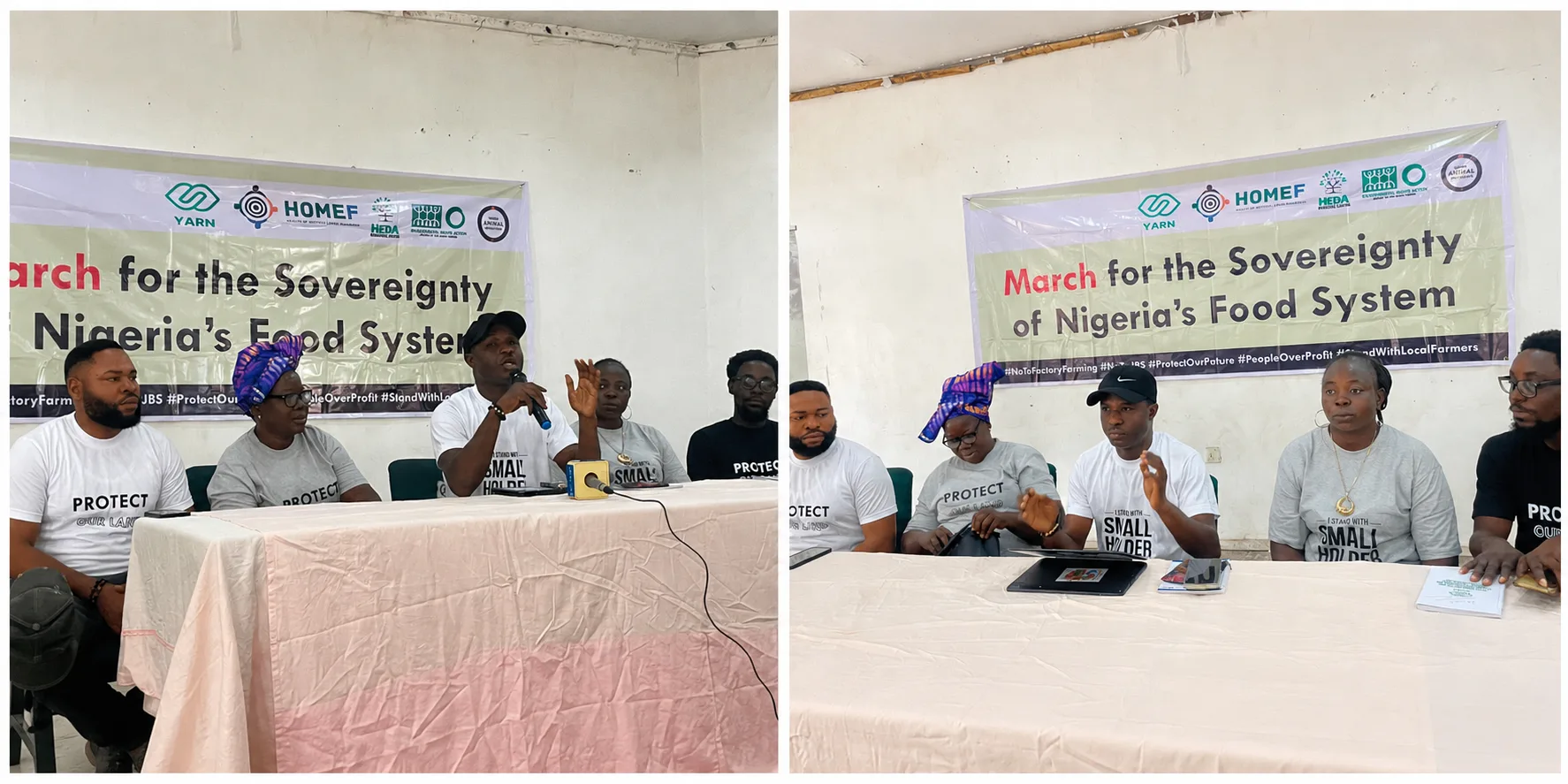
The coalition made the call on Thursday, August 13, 2026, during a sensitisation rally held at the Nigeria Union of Journalists (NUJ) Hall in Abeokuta, Ogun State.
JBS, a Brazilian meat corporation, is proposing to establish six industrial livestock facilities across Nigeria, with the Federal Government reportedly signing a Memorandum of Understanding (MoU) with the company and promising favourable economic, sanitary and regulatory conditions for the investment.
The coalition, while acknowledging the potential importance of investment in Nigeria’s agricultural sector, expressed concern over the possible environmental, public health, land and livelihood implications of large-scale industrial livestock production.
It argued that projects capable of significantly reshaping Nigeria’s food system should be guided by transparency, scientific evidence, accountability and meaningful participation by affected communities and other stakeholders.
The coalition alleged that the expansion of industrial animal farming could pose risks to food sovereignty, environmental sustainability and the livelihoods of smallholder farmers, who it described as central to Nigeria’s food production.
It also raised concerns over reports that Niger State had pledged about 1.2 million hectares of land for livestock investment, saying such an allocation would raise questions about land governance, community rights, biodiversity and the future of smallholder agriculture.
The group further questioned whether a significant proportion of the proposed production would be directed towards export markets, rather than primarily addressing Nigeria’s domestic food and nutrition needs.
According to the coalition, there is no publicly available evidence showing that comprehensive Environmental and Social Impact Assessments (ESIAs) have been completed or that adequate consultations have been conducted with relevant civil society and community stakeholders.
It said it had submitted Freedom of Information (FOI) requests to relevant federal institutions and participating state governments seeking access to the MoU, project implementation framework, environmental and social assessments, land allocation arrangements, investment incentives and other documents relating to the project.
The coalition said it had yet to receive substantive responses to the requests.
It argued that failure to disclose the documents could undermine public confidence and prevent citizens, experts and affected communities from properly assessing the project’s potential environmental, economic, health and social consequences.
The coalition therefore demanded the immediate publication of all agreements and project documents, including feasibility studies, ESIAs, land allocation agreements and incentive packages.
It also called for comprehensive and independent environmental and social assessments to be conducted and made publicly accessible before any approvals or implementation activities proceed.
The group urged the Federal and participating state governments to consult civil society organisations, farmers, pastoralists, women, youth, affected communities, environmental experts, public health professionals and independent researchers before taking further decisions on the project.
The coalition stressed that such consultations should not be treated as a mere procedural requirement after major decisions had already been taken, but should give stakeholders sufficient information and a genuine opportunity to influence the decision-making process.
It also called for stronger safeguards against environmental degradation and violations of labour and human rights, as well as greater accountability for multinational corporations operating in Nigeria.
The coalition clarified that its position was not against agricultural investment but in favour of investments that are transparent, environmentally responsible and consistent with Nigeria’s long-term development priorities.
It urged the Federal Government to disclose all documents relating to the proposed JBS investment, respond to outstanding FOI requests and begin an open and inclusive consultation process before making further commitments on the project.
The coalition maintained that Nigeria’s food system should be shaped through democratic participation, environmental protection, food sovereignty and public accountability.