The Federal Government has announced plans to conduct a nationwide household survey to determine the actual number of out-of-school children in Nigeria, in a move aimed at replacing outdated estimates with accurate data to guide education policies and interventions.
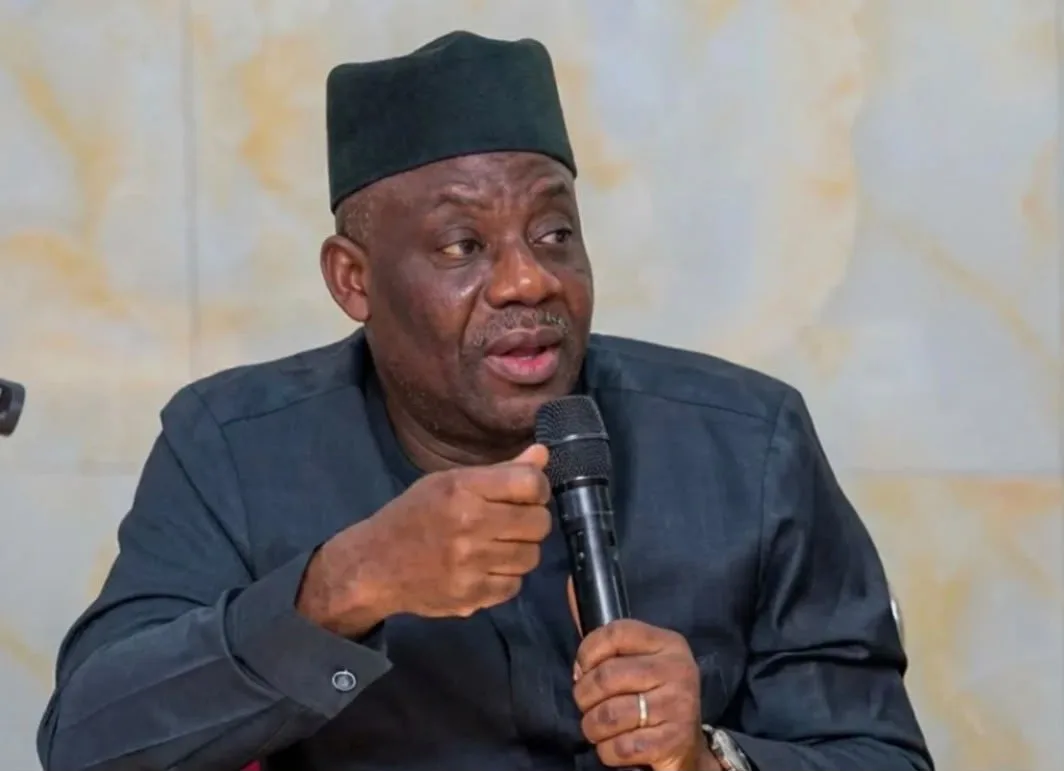
Minister of Education, Dr. Tunji Alausa, disclosed this on Wednesday at the 2026 Annual Education Summit of the Education Correspondents Association of Nigeria (ECAN) in Abuja.
He said the survey would be conducted in partnership with the National Bureau of Statistics (NBS) to generate credible and up-to-date figures that would support evidence-based decision-making in the education sector.
According to the minister, the government recognises that existing estimates of Nigeria’s out-of-school population no longer reflect current realities, making reliable data critical to tackling the challenge effectively.
Alausa revealed that although the Federal Government has successfully returned more than one million out-of-school children to classrooms over the past two years, obtaining accurate statistics remains essential for measuring progress and designing targeted interventions.
Current estimates place Nigeria’s out-of-school population at between 15 million and 20 million, one of the highest figures globally.
The minister said President Bola Tinubu’s administration remains committed to evidence-driven policymaking, adding that credible data would also strengthen transparency and enable citizens and the media to hold government accountable for education outcomes.
He urged journalists to embrace investigative and data-driven reporting that highlights challenges within the education sector and tracks the implementation of government reforms.
Alausa also highlighted key reforms under the Renewed Hope Agenda, including the expansion of Technical and Vocational Education and Training (TVET), promotion of Science, Technology, Engineering and Mathematics (STEM), digital transformation, improved quality assurance and increased access to education.
He further disclosed that Nigeria has recorded three consecutive years without disruptions to academic activities in universities, polytechnics and colleges of education, attributing the achievement to sustained engagement with tertiary institution unions.
Also speaking at the summit, Minister of State for Education, Prof. Suwaiba Ahmad, urged journalists to support education reforms through balanced and responsible reporting, while the Executive Secretary of the Universal Basic Education Commission (UBEC), Aisha Garba, reaffirmed the commission’s commitment to ensuring that every Nigerian child has access to quality basic education.
The summit, themed “Three Years of the Tinubu Administration: Assessing Reforms, Progress and Challenges in Nigeria’s Education Sector,” brought together policymakers, education stakeholders and journalists to review the administration’s education reforms and the challenges confronting the sector.