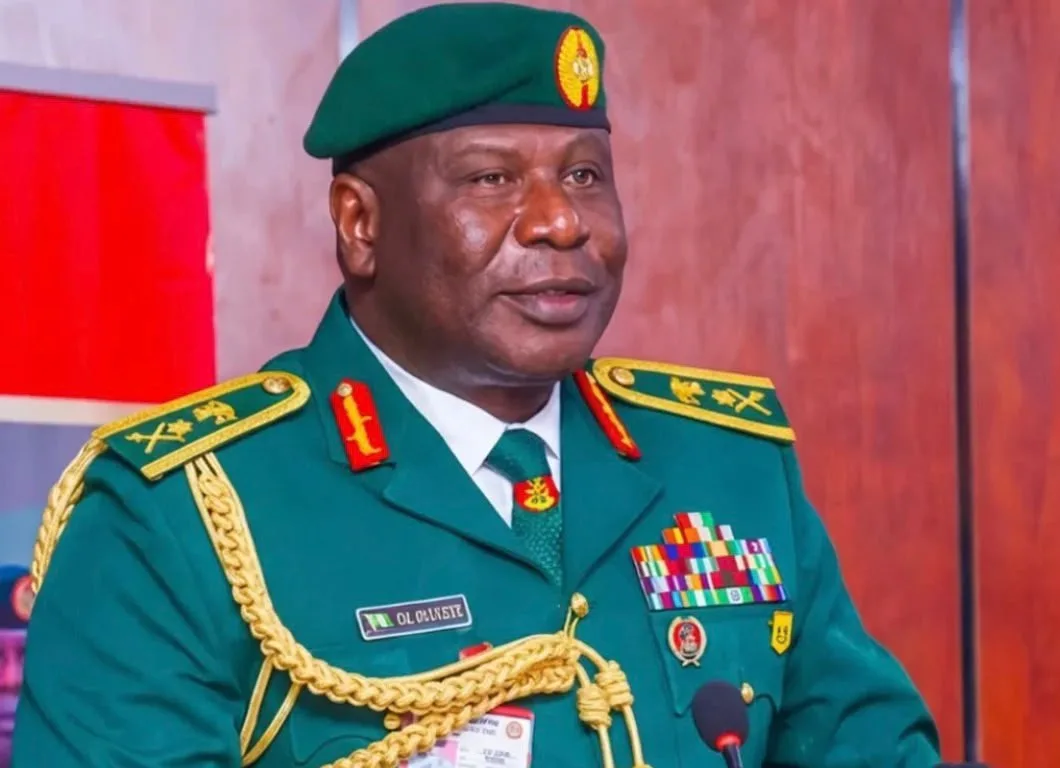
The Chief of Defence Staff (CDS), Gen. Olufemi Oluyede, has called for stronger collaboration among government institutions, civil society organisations, traditional rulers and other critical stakeholders to tackle Nigeria’s growing security challenges and promote lasting peace.
Oluyede made the call on Wednesday at the Royal College of Defence Studies (RCDS) Alumni Association Nigeria Chapter Summit in Abuja, where he stressed that military operations alone cannot end insecurity without trust, dialogue and collective national action.
Represented by the Chief of Defence Training, Rear Admiral Abolade Ogunleye, the Defence Chief described the summit’s theme, “Rebuilding Alliances, Trust and Consensus as Panacea for Tackling the Menace of Insecurity in Nigeria: Issues, Challenges and Prospects,” as timely and significant.
He said closer cooperation among the executive, legislature, judiciary, military, academia, traditional and religious institutions, the political class, civil society and youth groups is essential to strengthening social cohesion, national integration and sustainable security.
Oluyede noted that peaceful coexistence among Nigerians, regardless of tribe, ethnicity or religion, remains fundamental to national unity and should be promoted through education, religious engagement, sports and other social initiatives.
He further urged governments at all levels to create platforms that encourage dialogue, mutual trust and collaboration with civil society organisations and public-spirited individuals in addressing insecurity.
Expressing optimism, the Defence Chief said collective action and inclusive engagement would produce practical and lasting solutions to the country’s security challenges.
Also speaking, President of the RCDS Alumni Association, Nigeria Chapter, Major General Oluwaseun Oshinowo (retd), described the absence of elite consensus as one of Nigeria’s biggest security challenges.
According to him, while military and law enforcement efforts remain necessary, achieving lasting peace requires greater cooperation among the country’s political, economic, traditional, religious and intellectual leaders.
He added that such collaboration is vital to fostering national unity, strengthening democratic governance and restoring public confidence in efforts to combat insecurity.