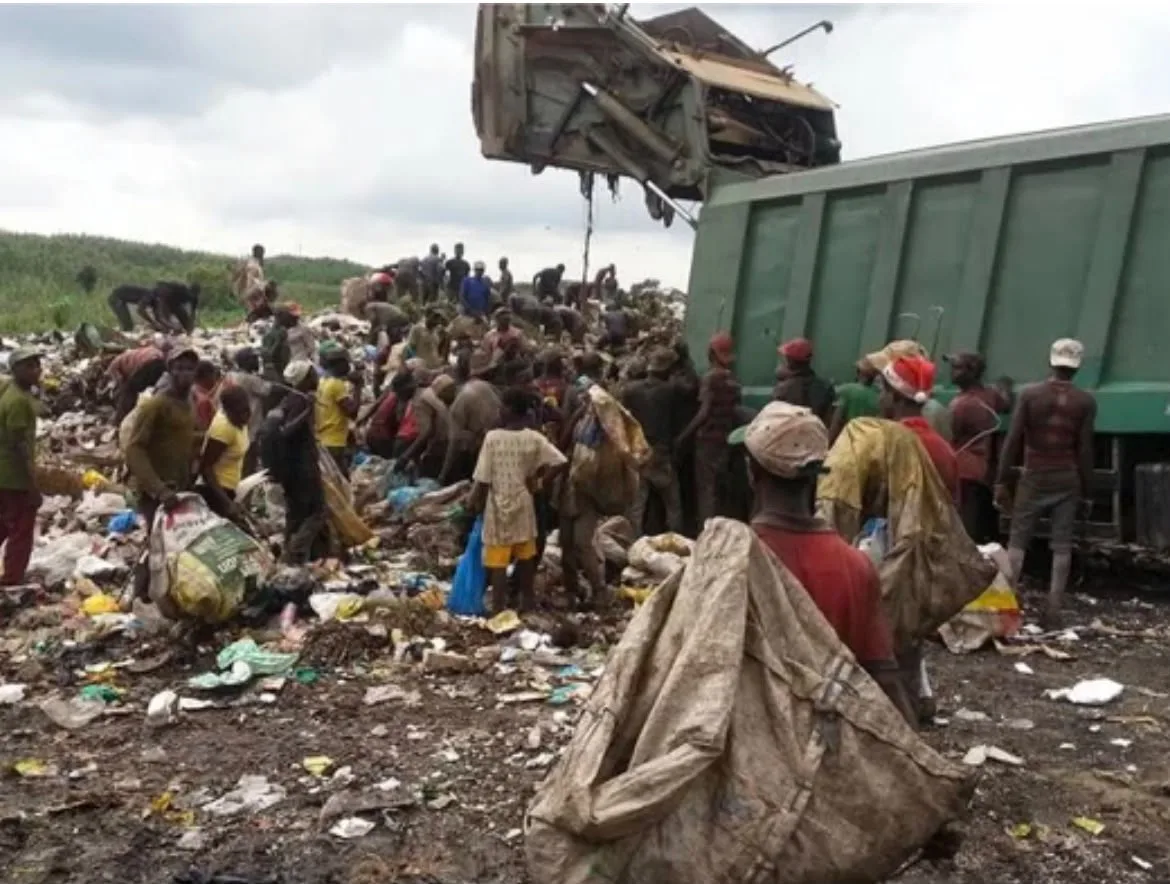
Residents of the Federal Capital Territory, FCT, have called for improved waste management and tighter monitoring of scavenging activities following concerns over the growing presence of ‘Baban bola’ in several communities.
The residents said the increasing number of scavengers moving around neighbourhoods, particularly at odd hours, had raised concerns about security and the protection of lives and property.
Communities including Nyanya, Karu, Jikwoyi, Mararaba and Masaka have reportedly experienced an increase in scavengers searching residential areas for recyclable materials.
Some residents alleged that certain individuals use scavenging as a cover to commit crimes, while others maintained that the solution should focus on proper regulation and an effective waste disposal system rather than treating all scavengers as criminals.
A resident identified as Mama Amina alleged that scavengers were linked to two burglary incidents in Mararaba, claiming that valuables were taken from her neighbour’s home.
“You see these Baban bola (scavengers); they are professional criminals. Forget about their pitiable look. At night, they broke into my neighbour’s house and went away with expensive valuables,” she said.
However, Ibrahim Dantata, a scavenger, rejected the perception that those involved in the trade were criminals, explaining that unemployment and lack of formal education had pushed him into the business.
“There is no job. I have no education and I have no skills. Not every scavenger is a thief,” he said.
Another scavenger, Adamu, who operates around Nyanya and Karu, said scavengers themselves do not tolerate criminal activities within their ranks. He said anyone caught stealing could face disciplinary action from members of the group.
Meanwhile, security expert and Managing Partner at Nextier, Ndu Nwokolo, said unregulated scavenging could expose communities to risks including burglary, pilfering, illegal surveillance, knife attacks and hooliganism.
Nwokolo urged the FCT Administration to enforce regulations governing scavenging and indiscriminate waste disposal while creating alternative livelihood opportunities for those who depend on the trade.
He also stressed the need for an efficient waste management system, saying regular refuse collection would reduce reliance on informal scavengers and make it easier for authorities to monitor their activities.
The residents’ concerns have consequently renewed calls for authorities to strike a balance between addressing security risks and protecting the livelihoods of scavengers who depend on the trade for survival.