By Adesakin Adefemi
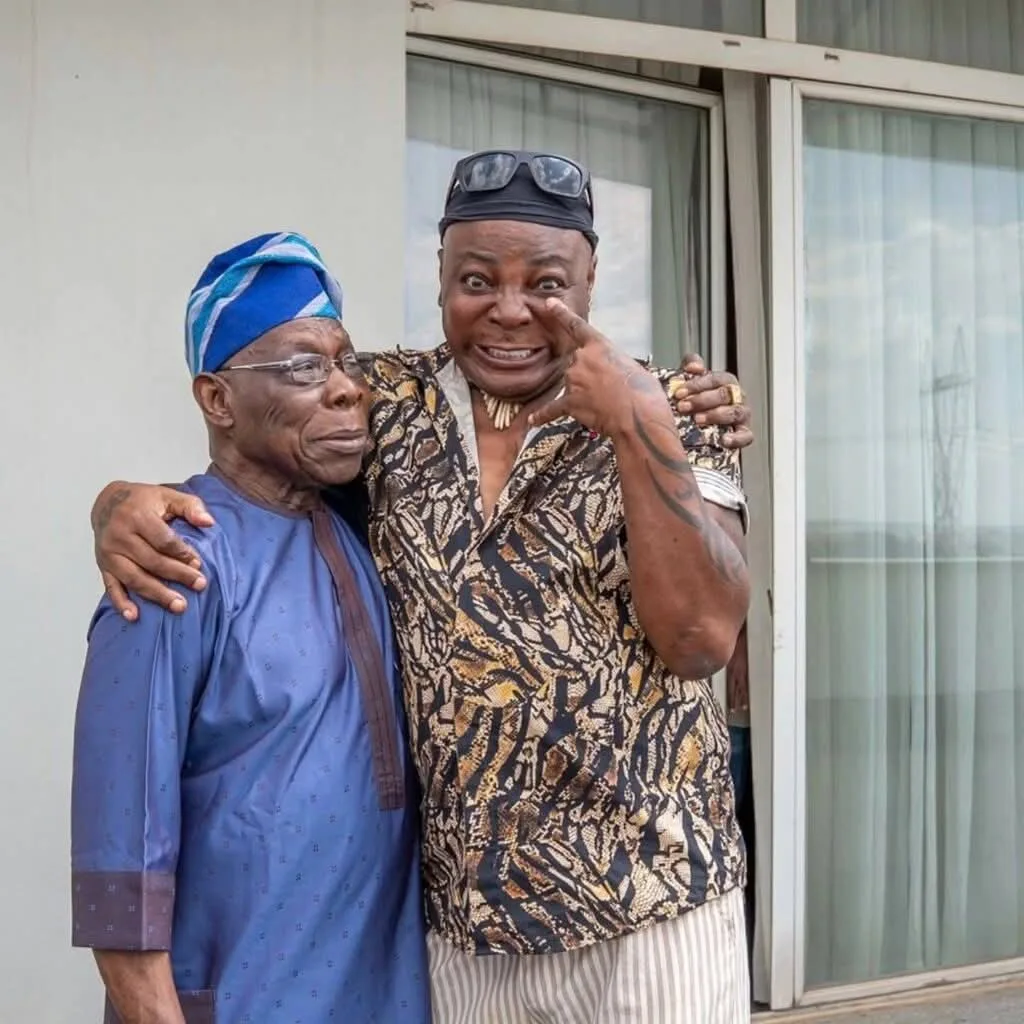
Former President Olusegun Obasanjo has revealed why he grew to admire entertainer Charles Oputa, popularly known as Charlie Boy, despite initially being put off by his unconventional “jaga-jaga” dressing.
Obasanjo spoke in an interview on the Before Tomorrow Comes Podcast_, released on YouTube on Thursday, where he reflected on his long-standing relationship with the Oputa family and how his perception of the entertainer changed over time.
The former president recalled being close to Charlie Boy’s father, late Supreme Court Justice Chukwudifu Oputa, whom he described as one of the few Nigerians he truly admired and considered a friend. He said the judge was known for his decency, immaculate dressing, and dignified bearing.
“When I started seeing Charlie Boy, I said, ‘Look, how can an adult dress like this?’ So I didn’t think much of him,” Obasanjo recounted. He admitted he initially scorned the entertainer because he expected the son of a respected judge to mirror his father’s polished appearance.
The turning point came when Obasanjo visited Justice Oputa and found him at Charlie Boy’s house. He said he was struck by the care and attention Charlie Boy gave his father, noting that even someone dressed immaculately could not have done better.
“If Charlie Boy had been ten times immaculately dressed, he would not have taken care of his father better than I saw him taking care of him,” Obasanjo said. He added that he later realised the entertainer’s eccentric style was part of his comedic identity and a way of making a living.
Obasanjo said his admiration deepened after Justice Oputa’s death, as Charlie Boy extended the same devotion to his mother. He described her as a “moral woman” and said Charlie Boy gave her a “decent goodbye that any child could give.”
The former president, who wrote the foreword for Charlie Boy’s memoir 999, said the book offers lessons on family, resilience, and philanthropy. He urged parents to guide their children but allow them to pursue non-criminal paths that reflect who they are.
Obasanjo also used the interview to advocate tolerance and national unity, warning against judging entire ethnic groups by the actions of individuals. The public presentation of 999 is scheduled for July in Lagos.