By Adesakin Adefemi
The Ogun State Emergency Medical Services and Ambulance System (OGSEMSAS), a department under the Ogun State Ministry of Health, has partnered with Emergency Response Africa to train private drivers in Sagamu as first-line responders, in a bid to reduce delays during medical emergencies and improve survival outcomes across the Local Government Area.
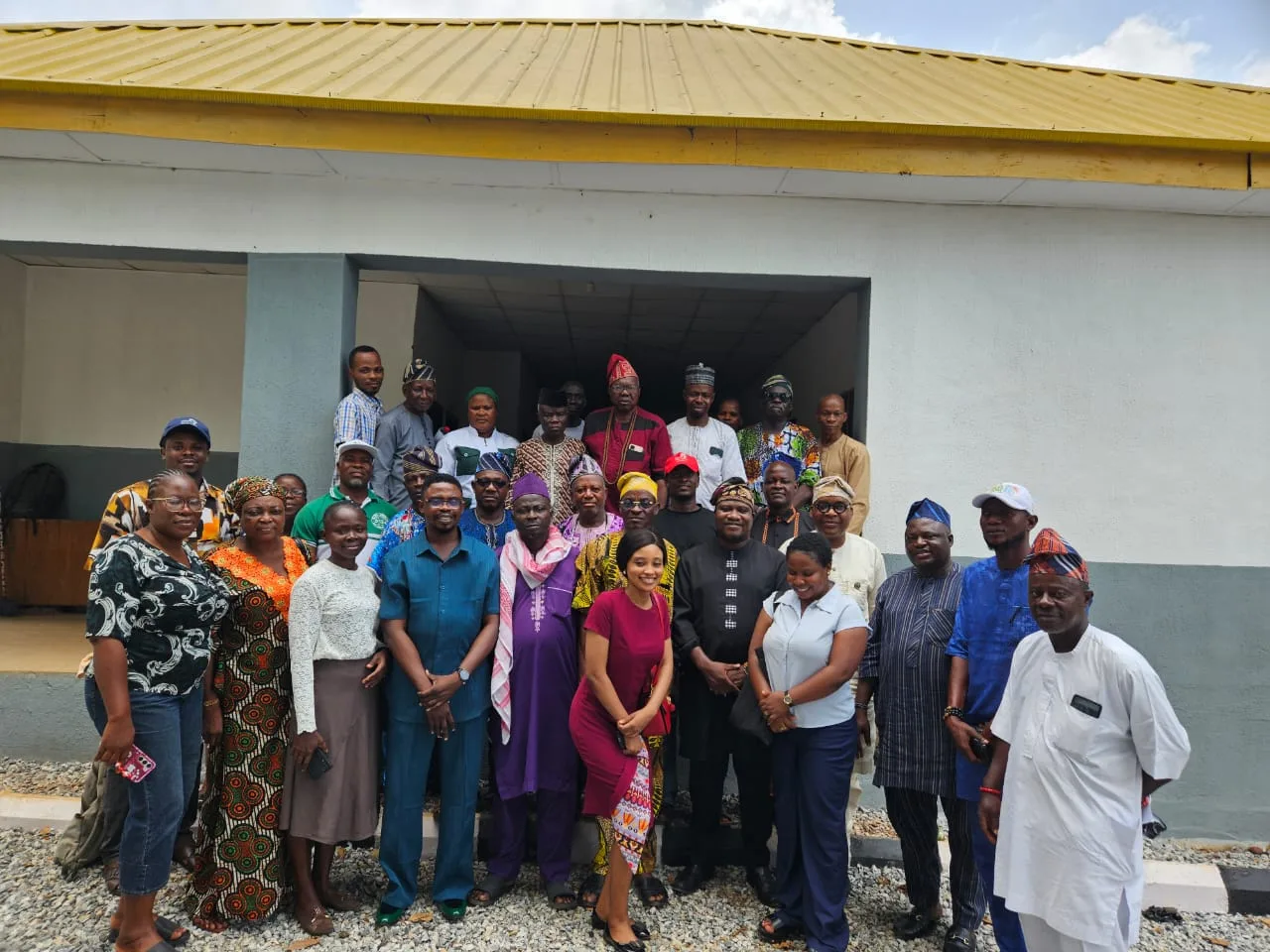
The partnership was formally unveiled at a stakeholders’ meeting with the Sagamu Local Government Ward Development Committee, where officials sensitized community leaders, transport unions, and health workers on the use of the state’s dedicated emergency line, 0811 200 0033, for rapid ambulance and medical response.
Dr Hassan Adelakun, State Director of the Ogun State Ambulance and Emergency Services, was represented by Nurse Florence Thompson, Head of Rural Emergency Services.
Thompson said the initiative is designed to decentralize emergency care and bring life-saving intervention “to the doorstep” of Sagamu residents through structured community participation and coordinated dispatch systems.
Under the scheme, each ward within Sagamu Local Government will nominate four individuals for screening and training to serve as Private Vehicles as Ambulance Services pilots.
The Ward Development Committee will provide oversight for the selected drivers, who will be activated during emergencies through the 0811 200 0033 hotline and integrated into the Ogun State Ambulance and Emergency Services communication network.
“Once there is an emergency, they will call 0811 200 0033 for a quick medical emergency response,” Thompson said.
She explained that the Private Vehicles as Ambulance Services model is intended to bridge critical transportation gaps in rural settlements and high-traffic corridors, ensuring victims receive stabilization and evacuation before conventional state ambulances arrive on scene.
Dr Olufemi Onasanya, Coordinator of Emergency Response Africa, described the engagement as both timely and strategic. “Emergencies can happen anytime. With this programme, tactical measures will be in place to tackle emergency issues with the help of the Ogun State Ambulance and Emergency number 0811 200 0033,” he said.
Onasanya noted that the initiative directly addresses transportation delays, which data show remain a leading cause of preventable deaths during medical crises.
He confirmed that Emergency Response Africa will support the training, certification, and operational coordination of Private Vehicles as Ambulance Services drivers across all Sagamu wards, including modules on basic first aid, patient handling, and emergency communication protocols.
Dr Orire Israel Oyeleke, Health Secretary of Sagamu Local Government, said the engagement demonstrates the state government’s commitment to equitable healthcare delivery. “This shows the state government is remembering Sagamu for the best because health is wealth,” he said.
He urged ward representatives to make the most of the opportunity, adding that additional health interventions and infrastructure upgrades are planned under the Local Government’s primary healthcare strengthening agenda.
Oyeleke emphasized that institutional commitment to emergency response remains non-negotiable. “No one knows who will face an emergency. With 0811 200 0033, the Ogun State Ambulance and Emergency Services can be reached for quick ambulance and emergency services, which is critical to saving lives within the golden hour,” he said.
Hon. Tola Olutayo, Chairman of the Sagamu Ward Development Committee and Secretary of the Ogun State Ward Development Committee, described the engagement as “a great development” for grassroots health access. He pledged the committee’s full cooperation in community mobilization, monitoring of driver conduct, and provision of feedback to the Ogun State Ambulance and Emergency Services to ensure accountability.
Reverend Akintayo Moses, Chairman of the Christian Association of Nigeria, Sagamu Local Government, urged stakeholders to embrace the partnership. “Emergency respects no one. This will serve as a link for closer engagement with the government and will help build public trust in our health institutions,” he said.
The meeting recorded broad-based participation, including the Sagamu Local Government Health Educator, Apex Nurses, religious leaders, the National Union of Road Transport Workers, representatives of the Christian Association of Nigeria and the Muslim community, Local Government officials, Ward Development Committee chairpersons, security agencies, the Emergency Response Africa project team, and officials of the Ogun State Government.
At the close of the session, stakeholders adopted a comprehensive implementation framework to guide the pilot phase. The framework secured unanimous buy-in from community and institutional actors, documented priority concerns such as accident-prone routes and maternal emergency hotspots, and identified community and health facility focal persons for each ward.
Collaboration with transport unions was formally ratified, with the National Union of Road Transport Workers committing to support driver vetting, compliance monitoring, and safety standards.
The meeting concluded with an agreed action plan that sets clear timelines for driver screening, ward-level sensitization campaigns, and the phased deployment of Private Vehicles as Ambulance Services pilots across all wards in Sagamu Local Government.
The plan also provides for quarterly performance reviews to assess the impact on emergency response time, patient outcomes, and community satisfaction.