By Adesakin Adefemi
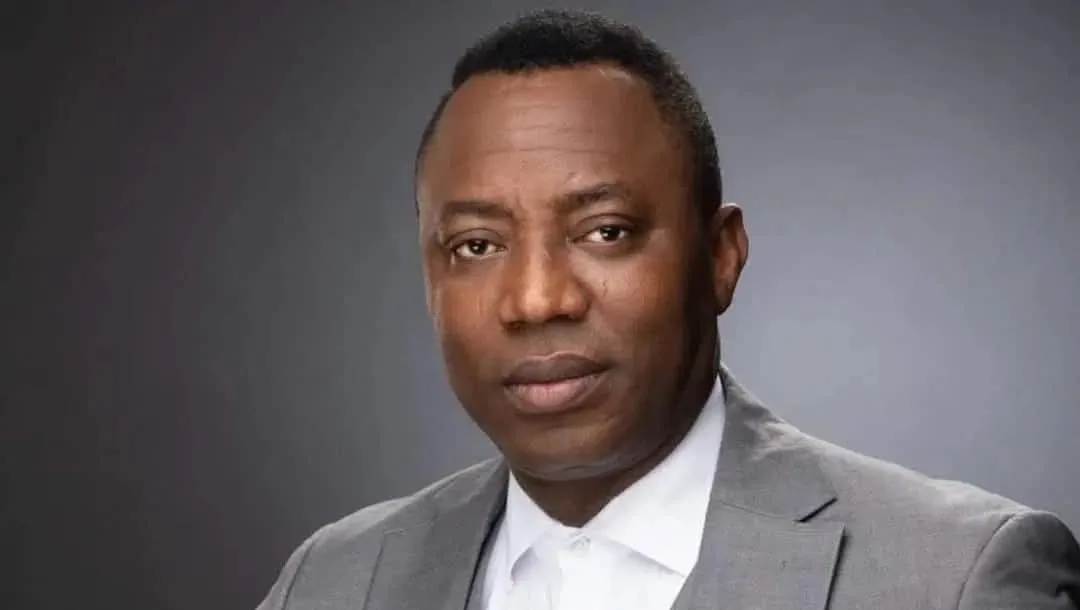
Human‑rights activist and former presidential candidate Omoyele Sowore has sharply criticised the recent U.S. military airstrikes carried out in Nigeria, describing them as a violation of national sovereignty and evidence of weak leadership under President Bola Tinubu.
In a post on his X (formerly Twitter) account, Sowore said the strikes were allegedly ordered by the U.S. President Donald Trump and U.S. Secretary of War Pete Hegseth on Christmas Day was conducted without genuine Nigerian consent.
Sowore accused the Nigerian government of presenting the operation as a “joint effort” with vague “international partners,” arguing that the description masks a lack of authentic authority from Abuja.
He wrote, “Although the Nigerian government now claims it was aware and describes the operation as a joint effort with vague ‘international partners,’ it is evident that the strikes were carried out without the genuine authority or informed consent of the weaklings masquerading as government under President Bola Tinubu.”
He underscored that the airstrikes targeted a village in Sokoto State, an incident that, in his view, demonstrates a profound misunderstanding and indifference toward Nigerians. “It is deeply troubling that Nigeria, Africa’s most populous nation, lacks the capable and sovereign leadership required to protect its people and its territory,” Sowore added.
The activist warned that foreign military intervention can not substitute for competent domestic governance. “Only true, tested, and informed leadership can protect Nigerians—not imperilled, jaundiced neoconservatives operating from Washington, D.C.,” he asserted, urging Nigerians to reject reliance on external powers.
The Defence Headquarters responded by confirming that the operation was a joint Nigeria‑U.S. security effort approved by appropriate federal authorities. Director of Defence Information Major General Samaila Uba said the strikes were based on credible intelligence and meticulous planning and aimed at degrading ISIS‑linked terrorists in the northwest while minimising collateral damage.
Foreign Minister Yusuf Tuggar also addressed the controversy, noting that Nigeria provided intelligence and gave formal approval for the U.S. action. He emphasized that the operation was part of broader counter‑terrorism cooperation and did not reflect a surrender of sovereignty.
The controversy has sparked a wider national debate about the limits of foreign involvement in Nigeria’s security affairs. Civil society groups and opposition figures are demanding transparency, an independent investigation into civilian impact, and a clearer definition of what constitutes “joint” operations.
Meanwhile, the Ministry of Foreign Affairs reiterated that all counter‑terrorism activities are guided by the protection of civilian lives, national unity, and respect for human rights. It pledged continued engagement with partners and regular updates to the public as developments unfolded.
The story remains under close scrutiny as Nigerians await further details on the operational coordination, the extent of civilian casualties, and the government’s plan to strengthen sovereign control over security decisions.