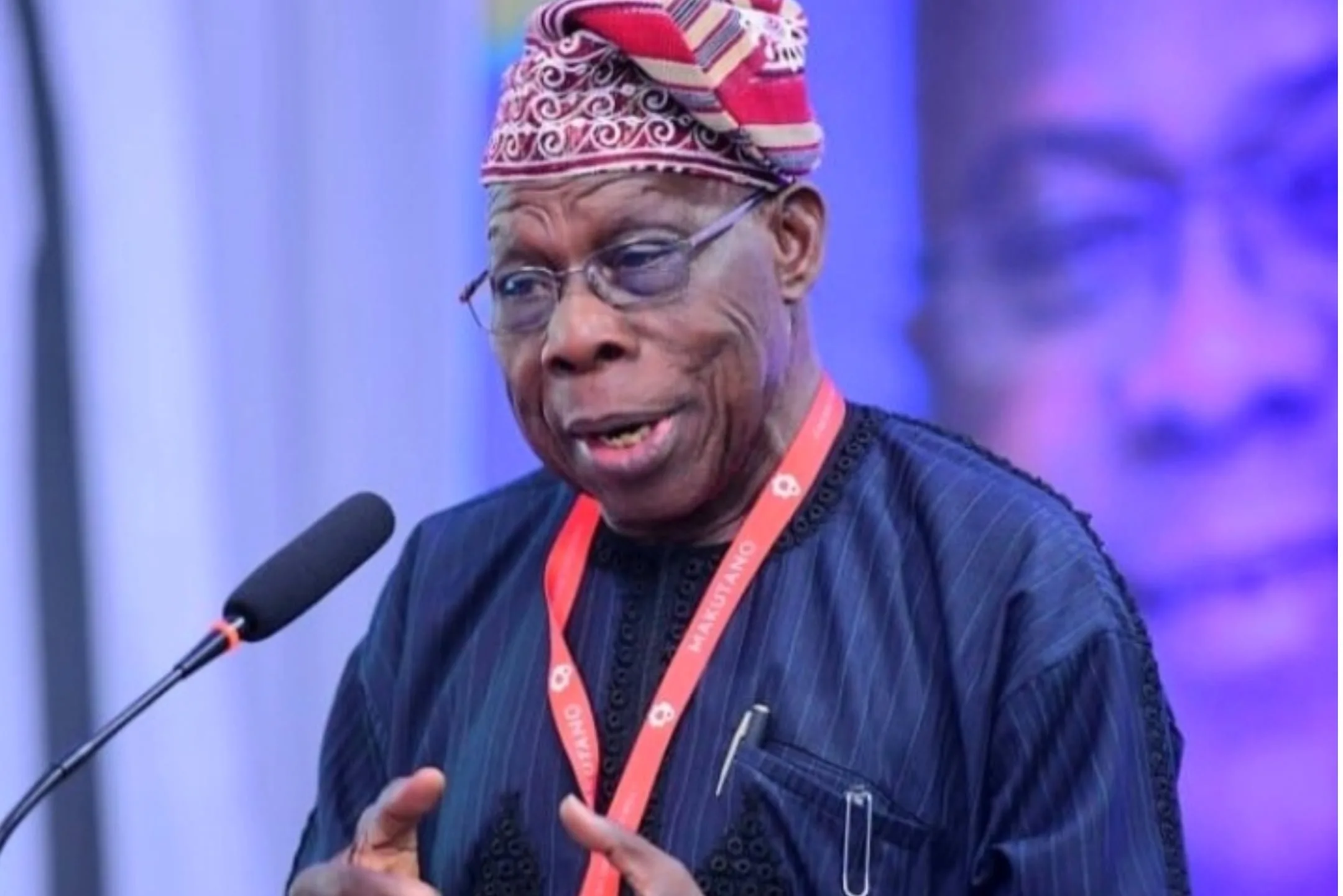
Former Nigerian President Olusegun Obasanjo has sounded the alarm on Nigeria’s descent into a “failing state” under President Bola Tinubu’s administration. Speaking at the Chinua Achebe Leadership Forum at Yale University, Obasanjo attributed Nigeria’s challenges to widespread immorality, corruption, and poor governance ¹.
“The failing state status of Nigeria is confirmed and glaringly indicated for all to see,” Obasanjo stated, emphasizing that the nation’s problems are deeply rooted in its leadership. He criticized the current administration’s continuation of “Baba-go-slow” policies and the “Emilokan” mindset, which he believes perpetuates a sense of entitlement in leadership.
Obasanjo also warned against “state capture,” describing it as one of the most dangerous forms of corruption. He noted that vested interests exerting undue influence over public institutions is exacerbating Nigeria’s problems. “What is happening in Nigeria—right before our eyes—is state capture, where public institutions are subject to undue influence from vested interests,” he said.
The former president highlighted pressing issues such as insecurity and food scarcity, cautioning that the nation risks greater instability if these problems are not addressed. He condemned politicians who exploit vulnerable citizens by distributing food items branded with their images, arguing that such practices undermine long-term solutions.
Obasanjo lamented that politicians prioritize short-term gains over meaningful change. “The political calculation here is that destitute people are more likely to vote for a politician who brings along gifts—ironically bought by looted treasury funds—than one who provides concrete solutions to their everyday problems.”
In response to Obasanjo’s criticism, the Nigerian Presidency has fired back, accusing the former president of hypocrisy. The Presidency noted that Obasanjo’s own administration was marred by corruption and poor governance, citing the unconstitutional impeachment of four governors and the failed third-term project ².
The Presidency also highlighted Obasanjo’s failure to address critical infrastructure needs, such as repairing federal roads and expanding the national road network. “While oil receipts brought money into the country, Obasanjo failed to fix the deplorable Federal roads or expand the national road network,” the statement read.
Despite the Presidency’s rebuttal, Obasanjo’s warnings about Nigeria’s trajectory have sparked concern among citizens. Many are calling for decisive action to address the nation’s pressing issues and prioritize the welfare of citizens over foreign interests.
As Nigeria navigates its current challenges, Obasanjo’s critique serves as a reminder of the need for effective leadership and good governance. The former president’s remarks have ignited a crucial conversation about the nation’s future and the importance of accountability.
In the face of mounting pressure, President Tinubu’s administration must now respond to Obasanjo’s criticisms and demonstrate its commitment to addressing Nigeria’s pressing problems. The nation’s stability and prosperity hang in the balance.