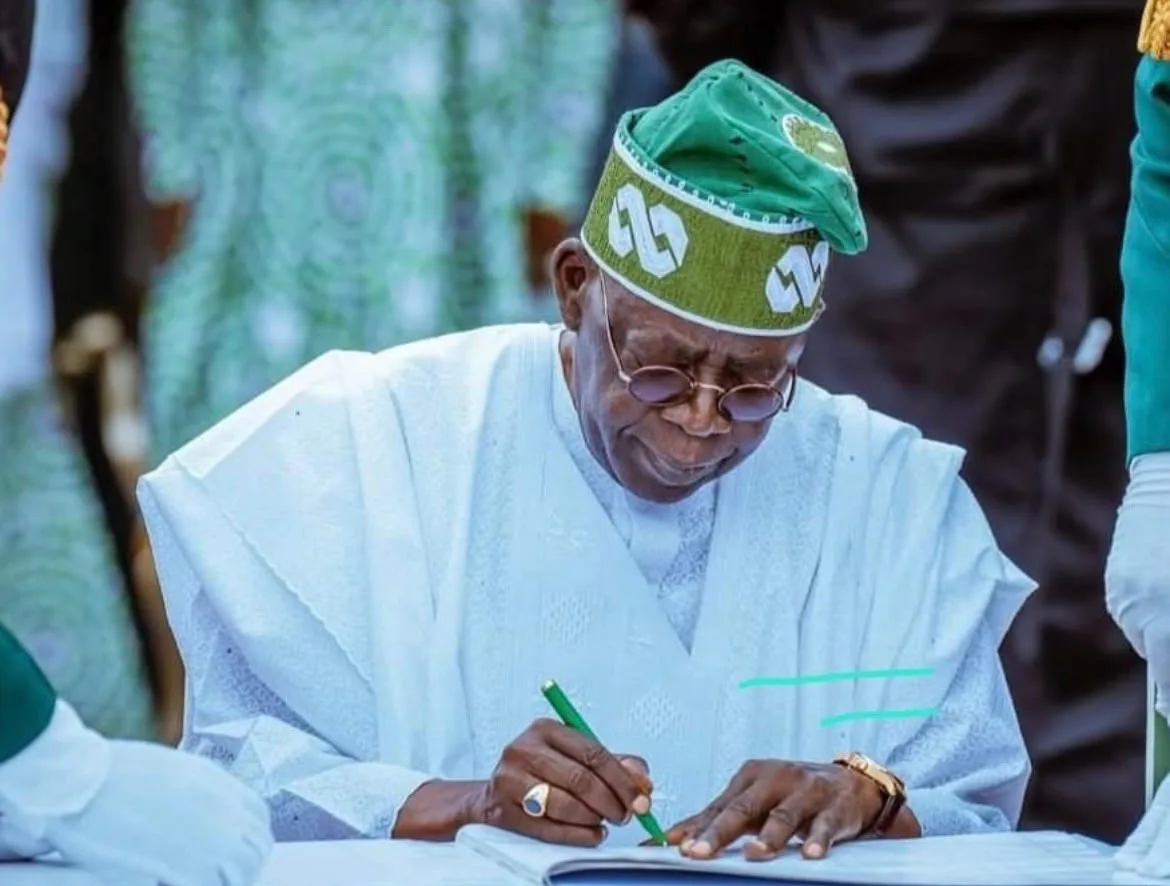
President Bola Tinubu has approved a new investment framework designed to revive stalled deep offshore oil projects and attract up to $50 billion in fresh investment into Nigeria’s petroleum sector.
The framework replaces project-by-project negotiations with a rules-based system intended to provide investors with greater certainty and improve Nigeria’s competitiveness in attracting long-term capital.
A statement by the President’s Special Adviser on Information and Strategy, Bayo Onanuga, said the framework would support a new generation of deep offshore developments, beginning with the approximately $10 billion Bonga Southwest project.
The reform is being implemented through the Deep Offshore Oil and Gas Projects Incentives (Tax Remission) Order, 2026, which provides eligibility requirements, implementation procedures and an investment structure for qualifying projects.
The approval also authorises NNPC Limited, the government’s nominated counterparty under the Production Sharing Contracts, to make the necessary amendments to eligible contracts to give effect to the framework.
The President’s Special Adviser on Energy, Olu Arowolo-Verheijen, said the initiative would also strengthen local participation in deep offshore project execution.
She said qualifying projects would be required to maximise activities carried out in Nigeria where commercially and technically feasible, particularly in engineering, fabrication, marine logistics, technical services and project management.
According to her, the reform is expected to boost investment and production while creating skilled employment opportunities and strengthening local supply chains.
She added that the initiative could position Nigeria as a regional hub for deep offshore project execution in Africa.
Tinubu commended the Ministries of Justice, Finance and Petroleum Resources, the Nigeria Revenue Service, NNPC Limited, the Nigerian Upstream Petroleum Regulatory Commission and the Nigerian Content Development and Monitoring Board, as well as industry partners, for their contributions to the development of the framework.
The President said the reform was intended to create a more predictable investment environment through clear rules, stronger institutions and long-term partnerships.
He expressed optimism that the framework would encourage capital inflows, support Nigerian businesses and ensure that the country’s oil and gas resources generate lasting economic value.