
Moshood Abiola Polytechnic (MAPOLY), in partnership with the Advanced Technological Incubation and Research Center (ATIRC), is set to redefine technology-enabled higher education in Nigeria with the official commissioning of the country’s first enterprise-grade 10 Gigabits per second (10Gbps) Dedicated Smart Campus Network and Innovation Program on Thursday, July 30, 2026, at the institution’s main campus in Abeokuta, Ogun State.
This landmark initiative represents a major milestone in Nigeria’s digital transformation journey, making MAPOLY the first public tertiary institution in the country to deploy an enterprise-grade 10Gbps dedicated broadband infrastructure specifically designed to support teaching, learning, research, innovation, and entrepreneurship. More than a connectivity project, the initiative establishes a new benchmark for smart campus development and demonstrates how advanced digital infrastructure can transform higher education into a catalyst for sustainable national development.

A 10Gbps Smart Campus Network delivers internet speeds of up to 10,000 megabits per second, providing secure, reliable, and ultra-low-latency connectivity capable of supporting thousands of simultaneous users and data-intensive academic activities. Such infrastructure enables universities to undertake advanced Artificial Intelligence (AI) research, High-Performance Computing (HPC), cloud-based teaching and learning, cybersecurity simulations, robotics development, Internet of Things (IoT) applications, immersive virtual and augmented reality experiences, digital libraries, smart classrooms, virtual laboratories, and seamless collaboration with research institutions around the world. By removing many of the connectivity limitations associated with conventional campus networks, the platform creates an enabling environment for innovation, interdisciplinary research, and digital scholarship.
At the centre of this transformation is the Advanced Technological Incubation and Research Center (ATIRC), a multidisciplinary research and innovation ecosystem established to bridge the gap between academic knowledge and practical technological solutions.
The ATIRC Innovation Program is designed to provide students, researchers, innovators, entrepreneurs, startups, government institutions, and industry partners with a collaborative environment for developing, testing, validating, and commercializing innovative products and services capable of addressing local, national, and global challenges.
Through technology incubation, mentorship, research support, knowledge transfer, and strategic industry collaboration, the programme is expected to strengthen Nigeria’s innovation ecosystem while promoting sustainable economic growth through science, technology, and entrepreneurship.
Speaking on the significance of the initiative, Bashirat Aderayo Bamigboye, Head of Research and Innovation at ATIRC and Chief Executive Officer of Alhaja Theultimate Computer Services (ATCS), described the project as a strategic investment in Nigeria’s future knowledge economy.
“This initiative is not merely about deploying faster internet connectivity. It is about creating a national platform where education, research, innovation, entrepreneurship, and industry converge to develop practical solutions to real-world challenges. By providing enterprise-grade digital infrastructure, we are empowering students, researchers, innovators, and startups to create globally competitive technologies while contributing meaningfully to Nigeria’s digital economy.”

She explained that the Smart Campus Network will strengthen digital teaching and learning, enable advanced scientific research, support startup incubation, encourage technology commercialization, enhance cybersecurity capabilities, and expand collaboration among universities, government agencies, development partners, and the private sector.
According to her, the initiative will help transform research outcomes into practical innovations that create employment opportunities, improve productivity, and contribute to national competitiveness.
The benefits of the project extend far beyond the MAPOLY community. The Smart Campus Network will accelerate research in emerging fields such as Artificial Intelligence, Machine Learning, Cybersecurity, Robotics, Data Science, Cloud Computing, and the Internet of Things. It will also support multidisciplinary research, facilitate access to international digital research resources, and strengthen collaboration between Nigerian institutions and global research partners.
Equally important, the initiative will improve teaching and learning through smart classrooms, virtual laboratories, digital learning platforms, and collaborative online environments that enrich students’ educational experiences. It will encourage digital entrepreneurship by supporting technology startup incubation, innovation-driven enterprises, and the commercialization of research outputs.

Through access to enterprise-grade digital infrastructure, students and young innovators will develop practical digital competencies, entrepreneurial capabilities, and research skills required to thrive in the Fourth Industrial Revolution. Collectively, these outcomes are expected to reinforce Ogun State’s growing reputation as one of Nigeria’s leading centres for technology, education, scientific research, and innovation.
The commissioning ceremony is expected to attract an impressive gathering of distinguished personalities from government, academia, industry, and the development community. Expected guests include principal officers of tertiary institutions, government officials, policymakers, technology industry executives, development partners, startup founders, researchers, innovators, students, and invited guests from across Nigeria. The event is expected to provide a unique platform for dialogue on the future of digital education, research collaboration, innovation policy, and technology-driven economic development.
The event is themed “Accelerating Nigeria’s Digital Economy,” reflecting a shared commitment to strengthening digital infrastructure within Nigeria’s higher education system while preparing students, researchers, innovators, and entrepreneurs with the knowledge and practical skills required to compete successfully in an increasingly digital and knowledge-driven global economy.
The initiative aligns closely with the Federal Government’s Digital Economy Agenda by demonstrating how strategic investment in advanced broadband infrastructure can improve educational quality, expand scientific research, stimulate innovation, promote digital inclusion, and support sustainable socio-economic development.
The successful implementation of this initiative has been made possible through strategic collaboration with MTN Nigeria, Huawei Technologies, and itel Energy. Their support underscores the growing importance of public-private partnerships in expanding digital connectivity, strengthening research capacity, fostering innovation, and developing the digital skills required to drive Nigeria’s technological advancement and economic competitiveness.
Across the world, leading universities have invested significantly in high-capacity digital infrastructure to support artificial intelligence research, advanced computing, interdisciplinary collaboration, digital innovation, and technology commercialization. By deploying an enterprise-grade 10Gbps Smart Campus Network, MAPOLY joins this global movement and demonstrates that African higher education institutions can leverage world-class digital infrastructure to advance educational excellence, strengthen research capability, foster entrepreneurship, and contribute meaningfully to national and continental development.
Beyond the commissioning ceremony, the MAPOLY Smart Campus Network and ATIRC Innovation Program represent a long-term investment in Nigeria’s future. The initiative is expected to stimulate indigenous innovation, encourage technology commercialization, strengthen university-industry partnerships, attract national and international research collaborations, and develop graduates equipped with the digital knowledge, technical competence, leadership qualities, and entrepreneurial mindset required for the rapidly evolving global economy.
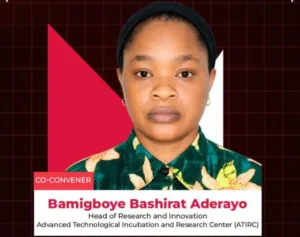
Bashirat further emphasized that as Nigeria advances toward a knowledge-based and innovation-driven economy, the commissioning of the 10Gbps Smart Campus Network represents far more than a technological upgrade. According to her, it demonstrates how strategic investment in world-class digital infrastructure can transform higher education into a catalyst for scientific discovery, technological innovation, entrepreneurship, and inclusive economic growth. She noted that the initiative provides a scalable model for other tertiary institutions across Nigeria to emulate while reinforcing MAPOLY’s commitment to producing globally competitive graduates equipped with the knowledge, digital competencies, research capabilities, and innovative mindset required to lead the next generation of technological advancement in Nigeria and across Africa.
Members of the academic community, government officials, policymakers, industry leaders, development partners, researchers, innovators, entrepreneurs, students, members of the media, and the general public are cordially invited to witness this historic commissioning ceremony as MAPOLY and ATIRC unveil Nigeria’s first enterprise-grade 10Gbps Smart Campus Network.
Be part of this landmark occasion as the institution sets a new standard for digital education, scientific research, innovation, and entrepreneurship, while contributing to Nigeria’s journey toward a globally competitive, knowledge-based, and innovation-driven economy.