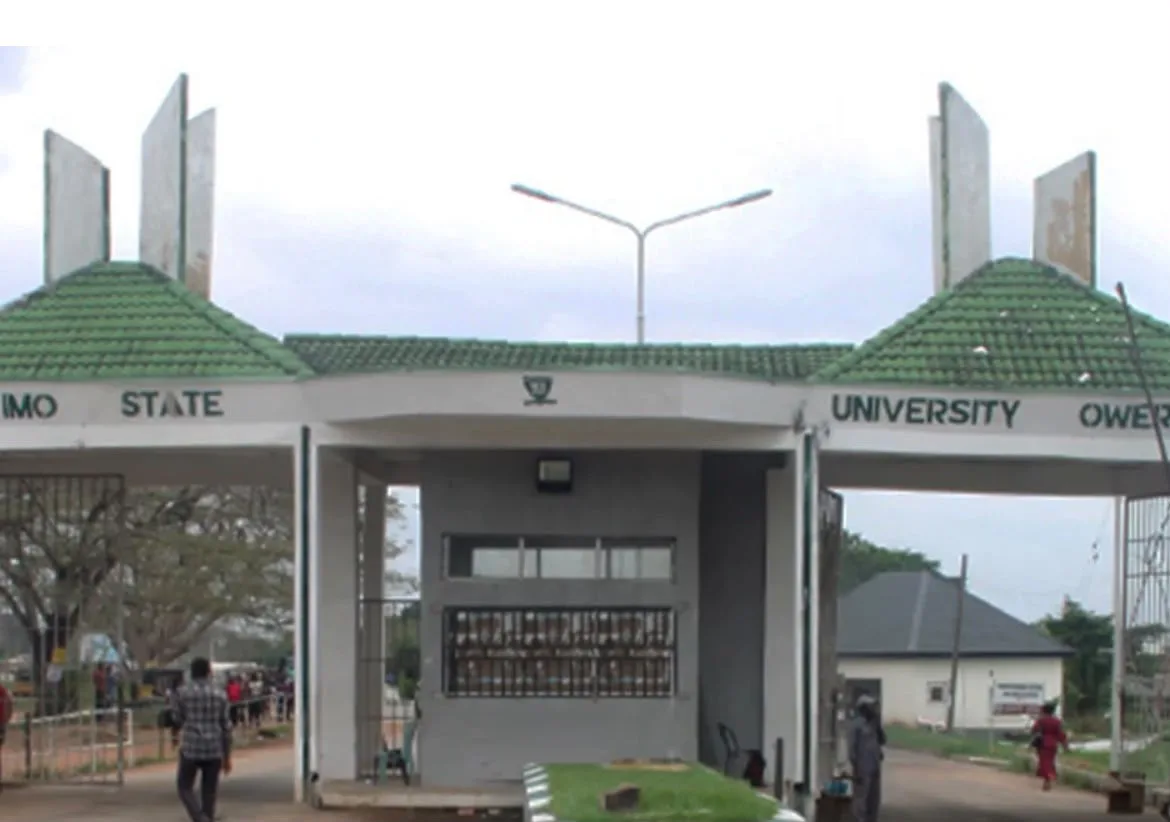
Academic activities at Imo State University (IMSU), Owerri, have been disrupted following the declaration of an indefinite strike by the university’s chapter of the Academic Staff Union of Universities (ASUU).
The union announced the industrial action on Monday, August 10, 2026, citing the failure of the Imo State Government and university management to implement the 2025 agreement between ASUU and the Federal Government.
The branch Chairman, Stephen Oguji, and Secretary, Lazarus Chikwendu, announced the decision during a press conference held at the university in Owerri.
According to the union, the agreement, signed by ASUU and the Federal Government on December 23, 2025, was designed to improve the welfare and conditions of service of academic staff and was scheduled to take effect from January 1, 2026.
ASUU-IMSU said it had repeatedly engaged the university management over the implementation of the agreement and had formally presented the document to the administration on several occasions.
The union added that it also issued a 21-day ultimatum to the authorities, but said no meaningful action had been taken.
The lecturers listed several outstanding issues, including unpaid salaries owed to some members for several months, promotion arrears dating back to 2016, 21 months of withheld check-off dues and non-payment of Earned Academic Allowances since 2009.
The union also faulted the continued retention of IMSU under the Treasury Single Account, describing it as an erosion of university autonomy.
ASUU said the unresolved issues had previously led to industrial action in 2024, which was suspended following appeals and assurances from the university management.
The union said it would not suspend the latest strike until the 2025 ASUU-Federal Government agreement was fully implemented at the university.
It called on the Imo State Government to urgently intervene and direct the implementation of the agreement, warning that continued delay could worsen industrial tension.
ASUU-IMSU also appealed to traditional and religious leaders, civil society organisations, parents, student unions and other stakeholders in the education sector to intervene and encourage the authorities to resolve the dispute.
The union, however, said it remained committed to dialogue and constructive engagement as the preferred means of resolving the dispute, but insisted that its willingness to negotiate should not be interpreted as acceptance of what it described as the continued denial of its members’ welfare rights.