By Adesakin Adefemi
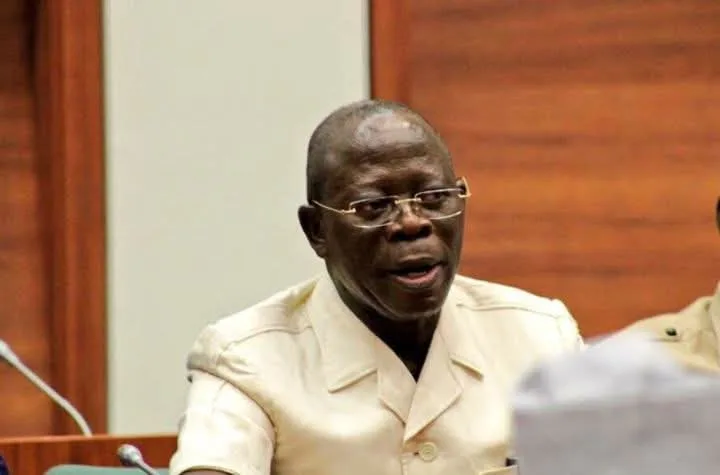
Senator Adams Oshiomhole, representing Edo North, has called on the federal government to take decisive economic retaliation against South African businesses operating in Nigeria following a recent wave of xenophobic attacks on Nigerians in South Africa.
The call came during Tuesday’s plenary session as lawmakers debated a motion on protecting the dignity and safety of Nigerian citizens abroad.
The motion, sponsored by Senator Osita Izunaso of Imo West and presented by Senator Aniekan Bassey of Akwa Ibom North-East, was raised under sections 41 and 42 of the Senate rules. Titled “A call for urgent national diplomatic and humanitarian action to defend the dignity, safety and honour of Nigerian citizens,” it responds to reports that at least two Nigerians have been killed since anti-foreigner tensions escalated in South Africa last month.
Oshiomhole specifically urged the government to consider revoking the operating licences of South African-owned companies in Nigeria. He named MTN and MultiChoice, the operator of DStv, as examples of firms that should face consequences if the hostility against Nigerians persists. The former Edo State governor argued that Nigeria must respond firmly rather than limit itself to diplomatic statements.
“I don’t want this senate to be shedding tears to sympathise with those who have died. We didn’t come here to shed tears,” Oshiomhole said during the debate. “If you hit me, I hit you. I think it is appropriate in diplomacy. It is an economic struggle.” His remarks signaled a tougher stance on Nigeria’s foreign policy response to attacks on its citizens.
The senator also suggested that Nigerians could capitalize on the economic space created by South African companies. He noted that many South Africans have accused Nigerians of taking jobs in their country, and said Nigerians should now return home and take over employment opportunities within firms like MTN and MultiChoice.
Oshiomhole stressed that retaliation would force South Africa’s leadership to act more seriously on the issue. “When we hit back, the President of South Africa will not only talk but will also go on his knees to recognise that Nigerians cannot be intimidated and we will not condone any one life being lost,” he said. He added that while South Africa has the right to prosecute Nigerians who commit crimes under its laws, killing citizens is unacceptable.
Despite the strong rhetoric, the Senate did not adopt Oshiomhole’s position in its final resolutions on the motion. Lawmakers instead focused on broader diplomatic and humanitarian measures to protect Nigerians abroad, though they condemned the violence and called for swift action from South African authorities.
The proposal has sparked renewed debate on Nigeria’s foreign policy and economic leverage in Africa. Analysts say targeting South African businesses could escalate bilateral tensions but also reflect growing public frustration over repeated attacks on Nigerians in the country. The incident adds to a pattern of periodic xenophobic violence that has strained relations between the two largest economies on the continent.
As discussions continue, the government faces pressure to balance diplomatic engagement with protecting its citizens. For now, Oshiomhole’s remarks have shifted the conversation from sympathy to action, underscoring a demand for a more assertive Nigerian response to the safety and dignity of its diaspora.