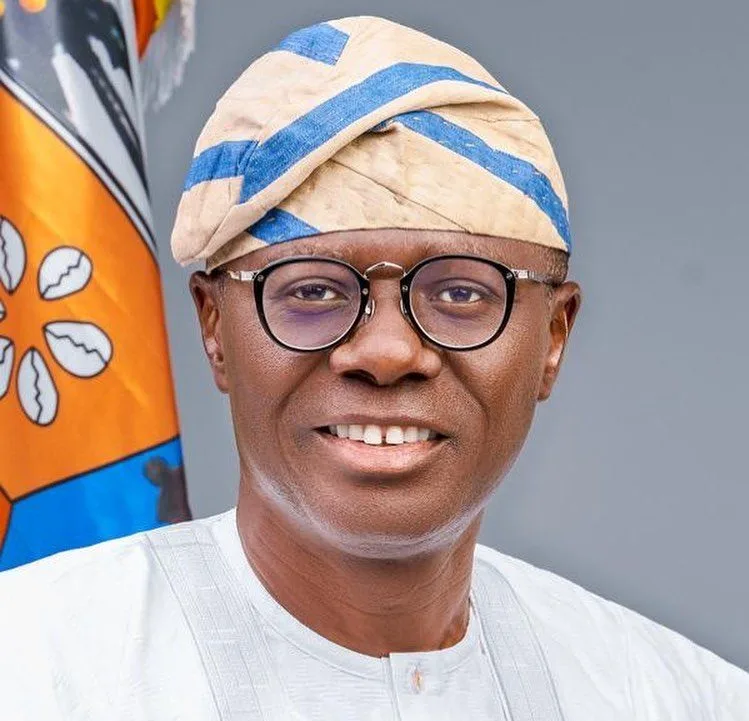
Lagos State Governor, Babajide Sanwo-Olu, has filed a fundamental right enforcement suit against the Economic and Financial Crimes Commission (EFCC) at the Federal High Court in Abuja. Sanwo-Olu’s lawyer, Darlington Ozurumba, submitted the suit on his behalf.
The governor is seeking protection against alleged threats of arrest, detention, and prosecution by the EFCC after his tenure ends in 2027. He claims these threats violate his fundamental rights as a citizen and governor.
Sanwo-Olu’s suit raises seven questions and seeks 11 reliefs. He argues that the EFCC’s actions are unconstitutional and amount to harassment, intimidation, and abuse of power.
The governor wants the court to declare that he is entitled to private and family life, acquisition of movable and immovable property, and freedom of movement as guaranteed by the 1999 Constitution.
He also seeks an order restraining the EFCC from seizing his properties, international passport, and travel documents or freezing his bank accounts.
During the court hearing, Ozurumba informed Justice Joyce Abdulmalik that he had replaced the earlier originating summons with a new one. However, EFCC’s counsel, Hadiza Afegbua, claimed she had not received the new documents.
Justice Abdulmalik adjourned the matter until November 11 for further mention.
Sanwo-Olu’s allegations against the EFCC include making false and malicious allegations against him and planning to arrest his aides and family members based on false allegations of diversion of funds.
The governor’s legal team claims that the EFCC’s actions are motivated by political adversaries and constitute a misuse of executive powers.
Sanwo-Olu was sworn in as Lagos State Governor on May 29, 2019, and re-elected for a second term on May 29, 2023.
This development highlights the ongoing tensions between government officials and anti-corruption agencies in Nigeria.
The EFCC has been instrumental in investigating and prosecuting high-profile corruption cases in the country.
However, allegations of political motivations and abuse of power have also been leveled against the commission.
The outcome of Sanwo-Olu’s suit will be closely watched, as it may set a precedent for future interactions between government officials and anti-corruption agencies.
In a related development, Sanwo-Olu has emphasized the need for value reorientation and concerted efforts to combat corruption in Nigeria.
He has implemented measures to promote accountability and transparency in Lagos State’s governance.
The case has sparked debate about the role of anti-corruption agencies in Nigeria’s democracy.
As the matter unfolds, Nigerians will be watching to see how the judiciary balances the need to combat corruption with the protection of individual rights.
The Lagos State Government has assured residents that it will continue to prioritize transparency and accountability.
The EFCC’s response to the allegations and the court’s decision will be crucial in determining the outcome of this high-profile case.