By Adesakin Adefemi
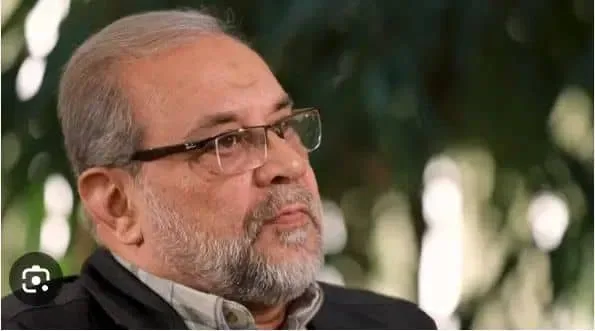
Iran has appointed Mohammad Bagher Zolghadr, a former Revolutionary Guards commander, as the new head of the Supreme National Security Council, succeeding Ali Larijani who was killed in an Israeli strike.
Zolghadr’s appointment was confirmed by state TV on Tuesday, and he is expected to play a major role in Iran’s war effort against the United States and Israeli strikes.
Zolghadr, a veteran of the 1980s war against Saddam Hussein’s Iraq, has had a long and distinguished career in the Revolutionary Guards. He served as the head of the Guards joint staff for eight years and then as the deputy commander-in-chief of the Guards for another eight years.
In 2005, he was named deputy interior minister for security and police in the government of then president Mahmoud Ahmadinejad.
The appointment of Zolghadr is seen as a significant move by Iran’s leadership to bolster its security apparatus in the face of increased threats from the United States and Israel.
Zolghadr’s experience in the Revolutionary Guards and his previous roles make him a strong candidate to lead the Supreme National Security Council.
Zolghadr’s new post gives him a major role in shaping Iran’s security policy and responding to threats from abroad. He will be working closely with President Masoud Pezeshkian, who formally appointed him to the position.
However, it is believed that the nomination was approved by Mojtaba Khamenei, the son and successor of the late supreme leader Ali Khamenei.
The Iranian leadership is still reeling from the killing of Ali Larijani, who was seen as a possible pointman in any eventual talks with the United States. Larijani’s death has created a power vacuum in Iran’s security establishment, and Zolghadr’s appointment is seen as a move to fill that gap.
Zolghadr’s career has been embedded in the Revolutionary Guards, and he is expected to continue the Guards’ hardline stance against the United States and Israel.
He has been a key figure in Iran’s security establishment for many years and has played a major role in shaping the country’s security policy.
The appointment of Zolghadr is likely to be seen as a provocation by the United States and Israel, and could lead to further tensions in the region. However, Iran’s leadership is unlikely to back down in the face of threats, and Zolghadr’s appointment is seen as a sign of Iran’s determination to defend itself.
The international community will be watching closely to see how Zolghadr navigates the complex web of Iranian politics and responds to the threats facing the country.
His appointment is a significant development in the ongoing conflict between Iran and its enemies, and could have far-reaching implications for the region.