By Adesakin Adefemi
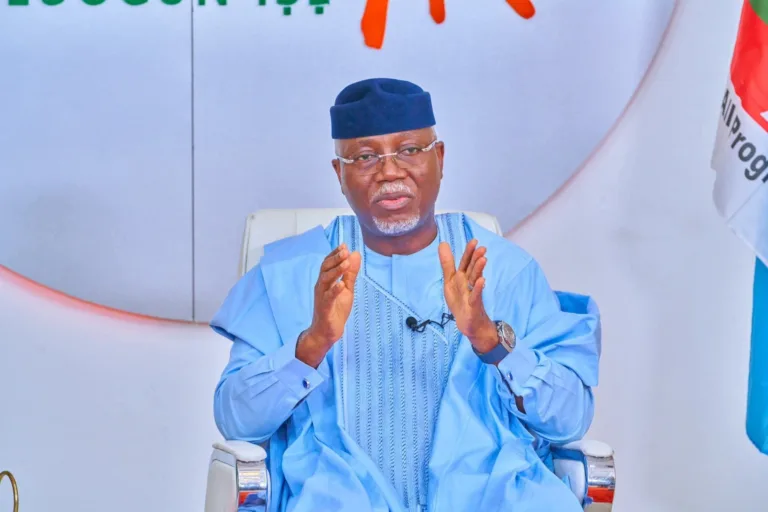
The Peoples Democratic Party (PDP) is reeling after the defection of Dauda Lawal, governor of Zamfara, leaving only two governors, Seyi Makinde of Oyo and Bala Mohammed of Bauchi, elected on the party’s platform.
Makinde described the development as a challenging period for the party and Nigeria’s democracy, sparking fears of a possible collapse.
Speaking in Abuja, Makinde said discussions with political actors and observers suggest that the country’s current political climate is unusual, with many predicting a major shift in the country’s political landscape. “I have been talking to people of knowledge, people who have been involved in the political evolution of this country, and none of them have seen a political landscape like what we are witnessing today,” he said, adding that the party must tread carefully to avoid further damage.
Makinde emphasized that the party’s leaders must remain conscious of how history would judge their actions during this period, saying that the decisions they make now will have far-reaching implications for the party’s future. “So, whatever role we want to play as individuals and collectively as a party, we must be conscious of what history is going to record against or for us for this period,” he said, urging party members to put aside their differences and work towards rebuilding the party.
The governor expressed optimism that the situation would improve, saying difficult times do not last. “Weeping may endure for the night, but in the morning, joy cometh,” he added, expressing confidence that the party would bounce back stronger.
Lawal’s defection has sparked concerns about the party’s future, with some predicting a possible collapse. However, a faction of the party led by Turaki has vowed that the PDP won’t die, saying it will be on the ballot in 2027 and emerge stronger. Turaki’s statement has been seen as a bold attempt to reassure party members and maintain morale.
The development has also raised questions about the party’s leadership and its ability to hold onto its remaining governors and members. Makinde’s statement is seen as an attempt to rally the party and reassure members that all is not lost, but analysts say more needs to be done to address the party’s deep-seated problems.
As the PDP struggles to find its footing, the ruling All Progressives Congress (APC) is likely to capitalize on the situation and strengthen its hold on power. The APC has already begun to exploit the PDP’s weakness, with some prominent members calling for a snap election to take advantage of the party’s disarray.
The crisis in the PDP comes at a time when the party is already facing internal conflicts and challenges to its leadership. The party’s internal divisions and power struggles have been well-documented, and Lawal’s defection is seen as a major blow to the party’s efforts to present a united front.
The situation is being closely watched by Nigerians and political analysts, who are eager to see how the PDP will navigate this difficult period and what implications it will have for the country’s politics. One thing is certain – the PDP’s crisis is far from over, and the party’s future hangs in the balance.