By Adesakin Adefemi
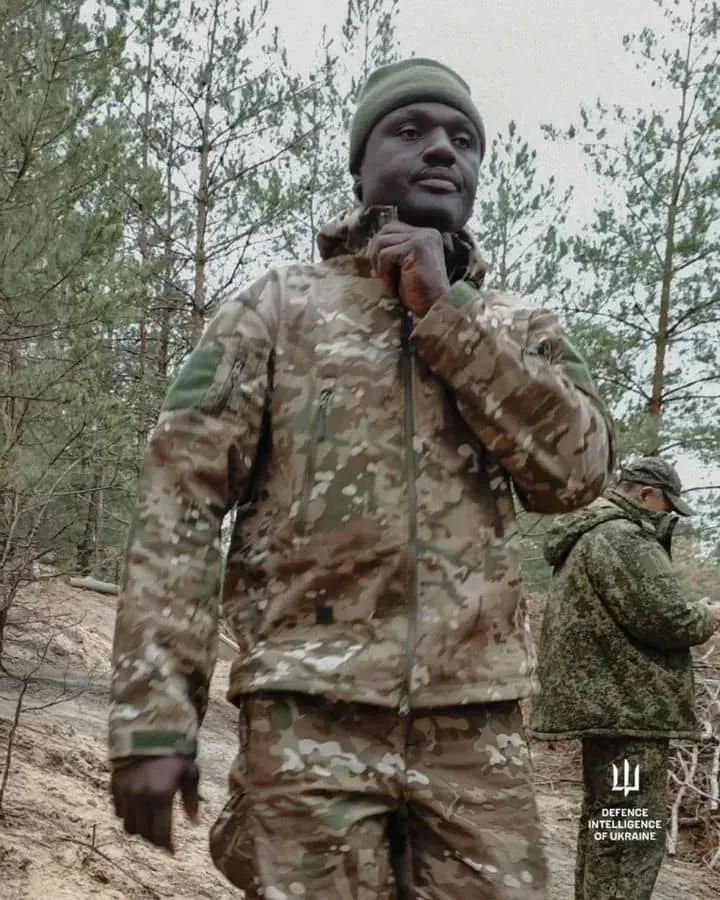
Ukraine’s Main Intelligence Directorate has confirmed the deaths of two Nigerian citizens, Hamzat Kazeen Kolawole and Mbah Stephen Udoka, who were killed in a drone strike while serving in the Russian military in the Luhansk region.
The agency disclosed this on Thursday in a statement titled “Nigerians in a meat assault the number of identified dead Russian mercenaries from Africa is rising.”
According to the statement, Kolawole (born April 3, 1983) and Udoka (born January 7, 1988) were discovered dead in late November during an attempt to storm Ukrainian positions.
Both men were serving in the 423rd Guards Motor Rifle Regiment (military unit 91701) of the 4th Guards Kantemirovskaya Tank Division of the Russian Armed Forces.
The intelligence report stated that the two Nigerians signed contracts with the Russian army in the second half of 2025 Kolawole on August 29 and Udoka on September 28. Udoka “received no training whatsoever” and was deployed to occupied Ukrainian territory just five days later, while Kolawole’s training records are missing, with officials noting it is “highly likely that he also received no military training.”
Kolawole leaves behind a wife and three children in Nigeria, adding a human tragedy to the already grim circumstances of their deaths. Ukrainian officials emphasized that neither man engaged in a firefight, as they were “eliminated by a drone strike” before reaching combat.
Ukraine’s Defence Intelligence used the incident to warn foreign citizens against traveling to Russia for work, stating, “A trip to Russia is a real risk of being forced into a ‘suicide’ assault unit and, ultimately, rotting in Ukrainian soil.”
The revelation comes after Russia denied any official involvement in recruiting Nigerians for the war. Russian Ambassador to Nigeria, Andrey Podyolyshev, stated, “There is no government-supported programme to recruit Nigerians to fight in Ukraine. If there are illegal organisations or individuals trying to recruit Nigerians by unlawful means, this is not connected with the Russian state.”
However, CNN reports and videos have alleged that some Nigerians and other Africans were recruited under the pretext of security jobs in Russia and later deployed to the war front after brief training. The conflicting accounts highlight concerns about foreign recruitment practices and the risks faced by unsuspecting individuals.
The deaths of Kolawole and Udoka underscore the dangers of foreign nationals being drawn into the Ukraine-Russia conflict and raise questions about how they ended up on the battlefield. Their case has sparked calls for greater awareness and protection for Nigerians and other Africans targeted by such recruitment schemes.
As investigations continue, the incident serves as a stark reminder of the human cost of war and the need for international vigilance against exploitation of vulnerable individuals in conflict zones.