By Adesakin Adefemi
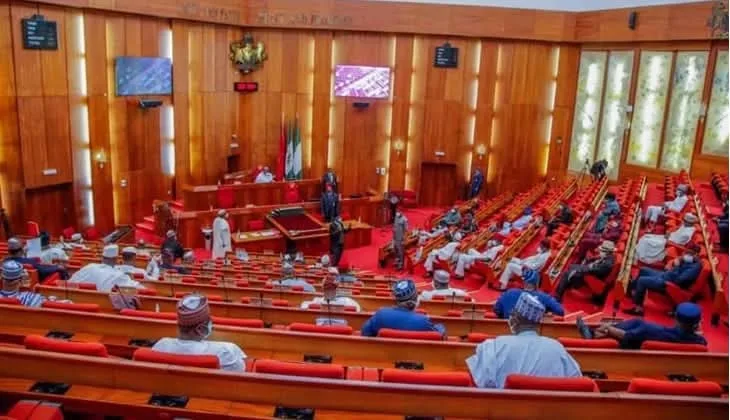
The Nigerian Senate has begun moves to amend the 1999 Constitution to increase the Federal Government’s share of revenue from the Federation Account, arguing that the existing formula no longer reflects the scale of responsibilities borne by the centre.
The proposed amendment comes amid renewed debate over fiscal federalism, following criticism by labour unions, civil society groups, and opposition figures that rising allocations to states have not translated into improved welfare for citizens.
Under the current revenue sharing formula, the Federal Government receives 52.68 per cent of federation revenue, the 36 states get 26.72 per cent, while the 774 local government councils share 20.60 per cent. Despite taking the largest portion, the Senate, through a bill sponsored by Senator Sunday Karimi (APC, Kogi West), is seeking an upward review of the Federal Government’s share.
The bill, which scaled first reading at plenary, seeks to amend relevant constitutional provisions regulating revenue allocation among the three tiers of government. Karimi argued that the proposed alteration seeks to increase federal government revenue allocation to address mounting financial obligations and national responsibilities across Nigeria.
“The current revenue sharing formula is outdated and unsustainable because it places excessive financial pressure on the federal government amid rising infrastructure decay and insecurity nationwide,” he stated. Karimi said there was an urgent need to adjust the formula to give the Federal Government a higher share to enable it meet its statutory responsibilities.
According to him, funding constraints had continued to affect the maintenance of federal roads and the fight against banditry and terrorism across the country. “Responsibilities borne by the Federal Government, particularly the construction and maintenance of federal roads across the country, have become overwhelming under the existing revenue formula aside from the enormous responsibilities on internal security,” he added.
Karimi expressed confidence that a higher allocation to the Federal Government would improve the country’s capacity to address insecurity and infrastructure decay. The Senate’s move has sparked debate, with some arguing that increasing the Federal Government’s share would further centralize power and undermine fiscal federalism.
The proposed amendment is likely to face opposition from state governments and other stakeholders, who may argue that it would deprive them of much-needed revenue. The Senate will need to engage in consultations with relevant stakeholders to build consensus on the proposed amendment.