By Adesakin Adefemi
A dramatic turn of events unfolded in Benin Republic on Sunday, December 7, 2025, as military officers announced the removal of President Patrice Talon from office, citing alleged authoritarianism and mismanagement.
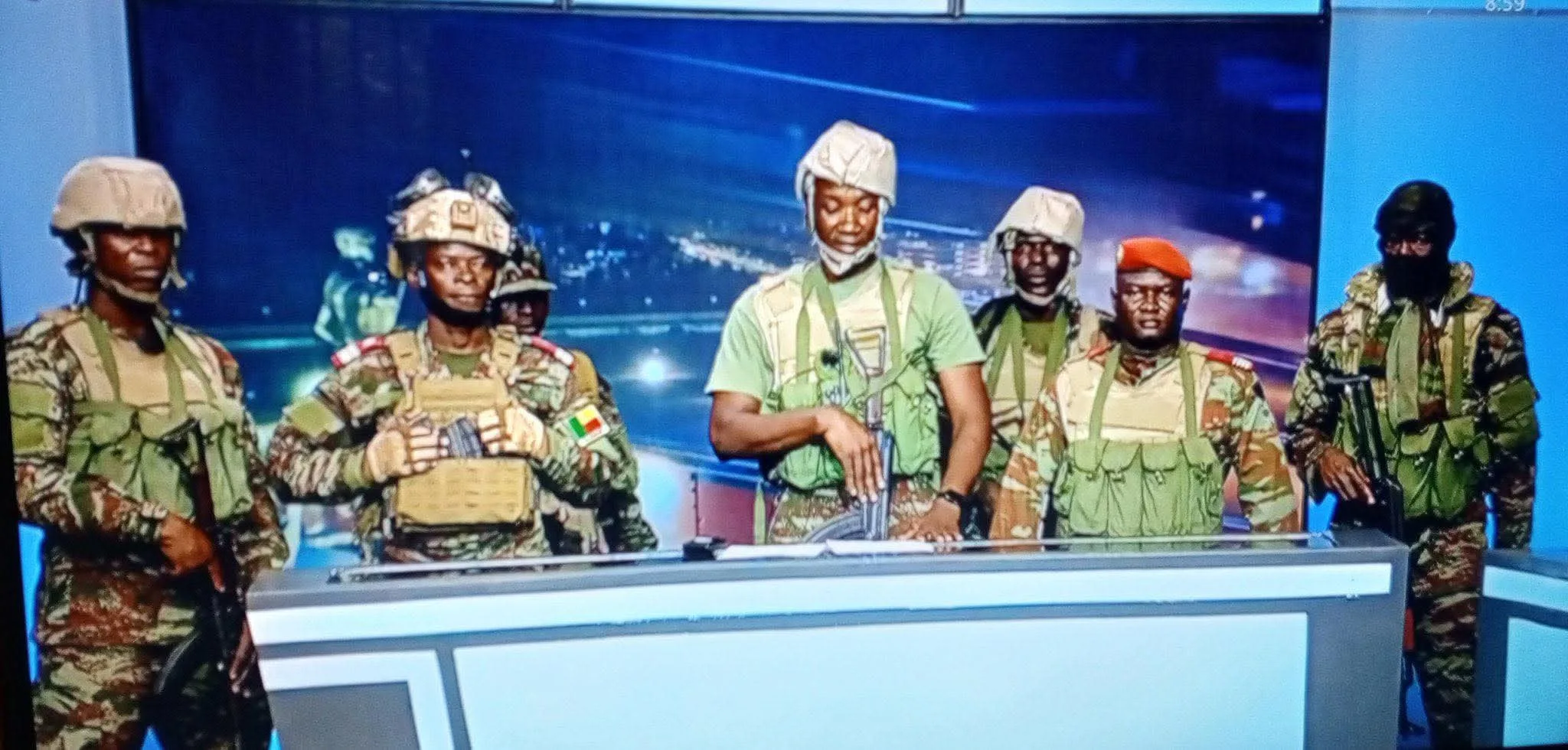
The soldiers, identifying themselves as the “Military Committee for Refoundation” (CMR), declared on state television that they had taken control, sparking concerns of a coup in the West African nation.
The CMR, reportedly led by Lieutenant Colonel Pascal Tigri, announced the suspension of the constitution, dissolution of state institutions, and closure of borders. The move has sent shockwaves across the region, with neighboring countries and international organizations monitoring the situation closely.
However, Talon’s entourage insisted that the president was safe and the army was regaining control, describing the coup attempt as a small group’s action.
The French Embassy reported gunfire near the president’s official residence in Cotonou and urged French citizens to remain indoors for security.
Talon, who has been president for 10 years, is due to step down in April 2026, marking the end of his second term allowed by the constitution.
His presidency has been marked by economic development, but critics accuse him of authoritarianism, citing the imprisonment of opposition members and manipulation of the electoral process.
The announcement follows recent coups in Madagascar and Guinea-Bissau, raising concerns about regional stability. Benin’s political history has been marked by several coups and attempted coups, particularly in the decades following independence from France in 1960.
The Economic Community of West African States (ECOWAS) is expected to respond urgently, and diplomatic sources suggest a high-level emergency meeting may be convened to assess the situation.
The international community is watching developments closely, with concerns about the implications for democracy and stability in the region.
The situation remains volatile, with the regular army reportedly regaining control, but the outcome and implications for Benin’s democracy are still unclear.
The CMR has called for calm and urged citizens to cooperate with the new authorities.
As the situation continues to unfold, the focus is on the response of the international community and the impact on Benin’s fragile democracy.
The next few hours and days will be crucial in determining the outcome of this latest development in the country’s turbulent political history.