By Adesakin Adefemi
November 20, 2025
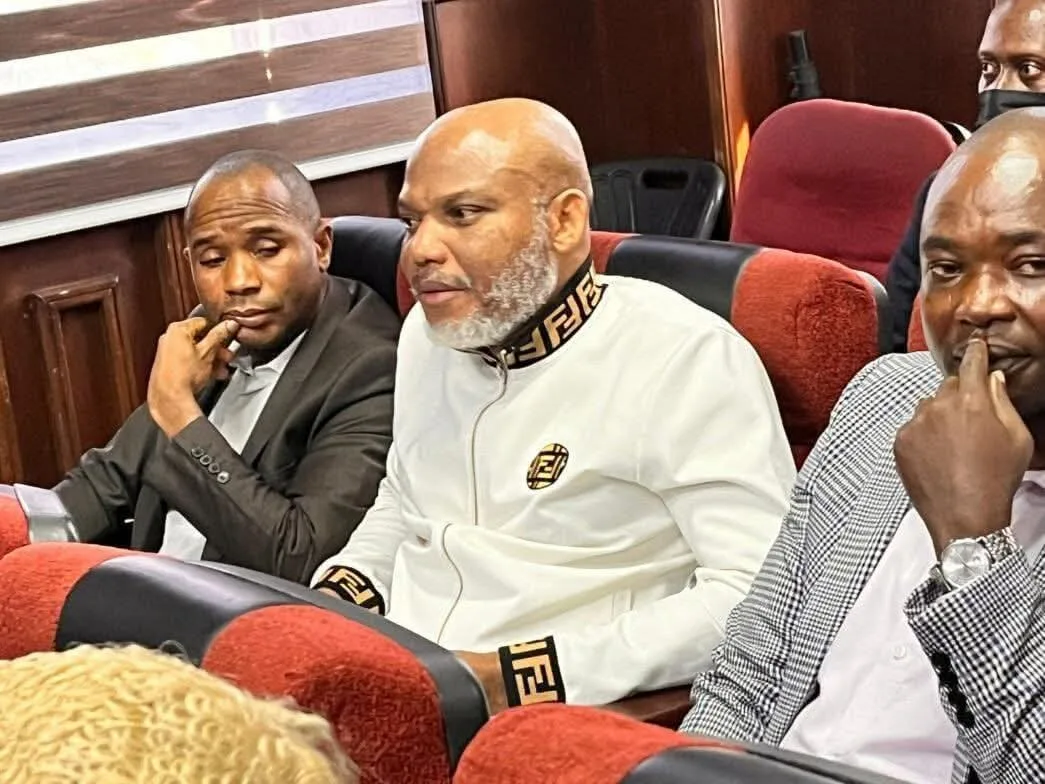
A Federal High Court in Abuja has sentenced Nnamdi Kanu, leader of the proscribed Indigenous People of Biafra (IPOB), to life imprisonment on seven counts of terrorism. Justice James Omotosho delivered the judgment, stating that Kanu’s actions were “grave offences” that warrant the highest statutory penalties.
Kanu was found guilty of inciting violence, running an unlawful organization, and threatening national security. The prosecution had pushed for the death penalty, but the court opted for life imprisonment instead.
Kanu, 57, has been in detention since June 2021, when he was arrested in Kenya and extradited to Nigeria. He was charged with several counts of terrorism, including treason, conspiracy, and membership in a terrorist organization.
The court heard evidence from the prosecution, including recordings of Kanu’s speeches and witness testimony, which supported claims that he incited violence and promoted secession. The defense, led by barrister Ifeanyi Ejiofor, argued that Kanu was exercising his right to free speech and that the charges were politically motivated.
Justice Omotosho rejected the defense’s arguments, stating that Kanu’s actions had caused harm to innocent Nigerians. He emphasized that the sentence was intended to serve as a deterrent to others who may seek to engage in similar activities.
The conviction and sentencing have sparked reactions from various stakeholders, including politicians, activists, and civil society groups. Some have called for calm and restraint, while others have urged the court to impose the maximum penalty.
The IPOB leader’s sentence is seen as a significant development in Nigeria’s efforts to combat terrorism and separatist movements. However, some have expressed concerns about the implications of the sentence and the potential for further unrest.
In a statement, the Nigerian government said it would continue to take steps to address the root causes of separatist sentiment and to promote national unity. The government also urged all parties to remain calm and to respect the rule of law.
The international community has been watching the situation closely, with some countries and organizations calling for restraint and respect for human rights. The European Union, in a statement, expressed concern about the sentence and called on the Nigerian government to ensure that the rights of all citizens are respected.
The case has highlighted the complexities and challenges of addressing separatist sentiment and terrorism in Nigeria. It remains to be seen how the government will respond to these issues in the future.
The sentence is a major blow to the IPOB movement, which has been advocating for the secession of the southeastern region of Nigeria.