
Former Ogun State Governor, Senator Ibikunle Amosun, has praised the Olowu of Owu Kingdom, Oba (Prof.) Saka Adelola Matemilola, for his commitment to cultural preservation and grassroots development.
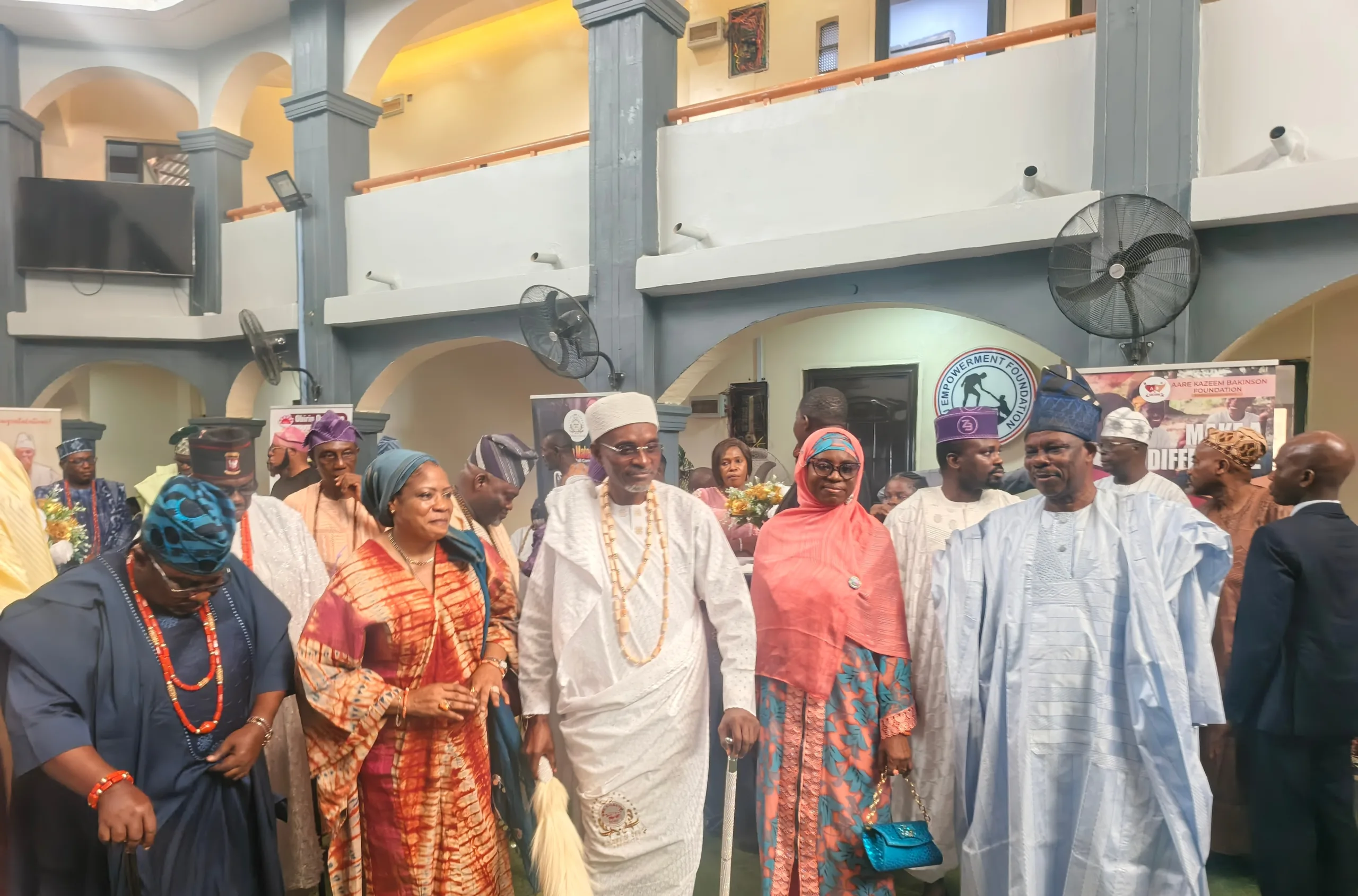
Amosun gave the commendation during the commissioning of the newly constructed Ajibosin Hall and the official launch of the symbolic “Owo Cowry” currency at the Olowu’s Palace in Abeokuta.
He described the monarch’s initiatives as a visionary blend of tradition and modernity, noting that the reintroduction of the cowry as a cultural symbol reflects a strategic reconnection to Yoruba ancestral values in a rapidly evolving society.
Speaking at the event, Oba Matemilola explained that the serialized Owo Cowry tokens will be used to implement a school feeding programme across selected primary schools in Owu Kingdom. Rather than cash, pupils will receive numbered cowry tokens daily to access meals from certified food vendors. Vendors, in turn, will submit the tokens for verification and payment, ensuring transparency and accountability.
Beyond education and welfare, the initiative is also designed to stimulate local commerce. According to the monarch, discussions are ongoing with local vendors and supermarkets to accept the cowry as gift vouchers or for discounts, further extending its practical value.

Oba Matemilola emphasized that the project not only addresses present-day social needs but also serves as a revival of indigenous economic practices. “We are bringing back what our ancestors once used,” he said, “and by doing so, we reconnect our people with their cultural identify.
Chief Abiodun Lasile, the Orunto of Owu Kingdom, described the Cowry launch as “a milestone in cultural innovation,” noting its potential to become a replicable model for other communities seeking to leverage tradition for modern socio-economic solutions.
Dr. Ismail Akindele, the Babaseto and Baba Adinni of Owu Kingdom, described the celebration as “the most impactful yet,” adding that the Cowry currency will benefit not only Owu indigenes but all residents and stakeholders connected to the kingdom.
“This is not just about cultural nostalgia. This is a real financial instrument with the capacity to transform local enterprise and youth development,” Akindele said.